How Do Top Parks and Recreation Departments Keep Their Communities Involved?
A Practical, Field-Tested Guide to Group Activities That Support Youth Programs, Public Events, and Community Recreation
Municipal parks and recreation directors across New Jersey—and in communities nationwide— frequently ask the same question:
How do the most successful parks and recreation departments keep their communities engaged throughout the entire year?
This question is more relevant today than ever. Community expectations are growing, participation models are changing, and municipal budgets must stretch further while delivering measurable value.
For parks and recreation professionals, community engagement is not just a goal—it is a responsibility. Whether managing youth recreation programs, seasonal festivals, or public events, departments play a central role in strengthening community ties and promoting healthy, active lifestyles.
However, maintaining consistent engagement across multiple programs, age groups, and seasons requires careful planning, durable equipment, and operational efficiency.
Why Community Engagement Is the Core Metric of Successful Recreation Programs
Experienced parks and recreation directors understand that success is not measured only by attendance numbers. It is measured by:
- Repeat participation
- Community satisfaction
- Program efficiency
- Safe and inclusive environments
- Long-term sustainability of programming
Across municipalities in New Jersey counties such as Morris, Bergen, Passaic, Essex, and Somerset, departments are facing similar operational realities:
- Limited budgets
- Increasing participation demand
- Staffing challenges
- Equipment durability concerns
- Seasonal programming pressures
Departments that maintain strong engagement levels typically rely on structured, repeatable group activities that can be used across multiple programs and throughout the year.
This shift toward structured group programming reflects a broader trend seen across municipal recreation planning nationwide.
What Group Activities Work Best for Community Programs and Public Events?
One of the most common operational questions among recreation professionals is:
Which group activities consistently perform well across youth programs, public events, and seasonal recreation schedules?
Based on municipal program observations and recreation planning best practices, the most effective group activities share several key characteristics.
Successful group activities typically:
✔ Encourage participation across multiple age groups
✔ Allow many participants to engage at the same time
✔ Require minimal setup time for staff
✔ Are easy to supervise in public settings
✔ Support flexible scheduling across programs
✔ Can be reused across multiple seasonal events
These characteristics are not theoretical—they are practical requirements identified by recreation professionals working in real municipal environments.
Why Group-Based Activities Drive Higher Community Participation
Municipal recreation leaders consistently report that group-based activities outperform individual activities in community settings.
This is because group participation creates:
- Shared experiences
- Social interaction
- Friendly competition
- Team cooperation
- Community bonding
When residents participate together—rather than individually—they form stronger social connections. Those connections are a major driver of repeat attendance and long-term community involvement.
Programs that incorporate team-based and structured group activities often report:
- Higher participant retention
- Increased program visibility
- Improved community satisfaction
- More consistent attendance rates
These results are especially important in municipal environments where public value and community outcomes must be clearly demonstrated.
The Operational Challenges Municipal Recreation Leaders Face
Maintaining year-round engagement requires balancing multiple competing priorities.
Municipal recreation leaders frequently face:
Budget Limitations
Budgets must support:
- Equipment purchases
- Program development
- Facility maintenance
- Staff training
- Event logistics
Investments must provide long-term value, not short-term novelty.
Equipment Durability Requirements
Public-use equipment experiences:
- Frequent handling
- Repeated daily use
- Exposure to outdoor conditions
- Transport between facilities
Equipment failures disrupt programs, increase costs, and create scheduling challenges.
For this reason, many departments now prioritize commercial-grade recreation equipment designed specifically for municipal use.
Staffing and Supervision Efficiency
Municipal programs often operate with limited staffing.
Activities that require:
- Complex setup
- Constant supervision
- Frequent repair
can place unnecessary strain on personnel.
Group activities that are easy to manage and supervise help improve overall program efficiency.
Why Durable Group Activities Are Becoming a Priority for Municipal Programs
Across New Jersey municipal recreation systems, there is growing recognition that durability equals reliability.
Reliable equipment allows departments to:
- Maintain predictable schedules
- Reduce unexpected costs
- Improve staff productivity
- Deliver consistent community experiences
Durable group activity systems are especially valuable because they support multi-season programming, including:
- Spring youth programs
- Summer camps
- Fall community festivals
- Winter indoor recreation
This flexibility makes durable group equipment a long-term municipal asset, rather than a seasonal expense.
How Multi-Season Programming Improves Community Engagement
Municipal programs that remain active throughout the year tend to maintain stronger community relationships.
Multi-season programming allows departments to:
- Maintain consistent visibility
- Provide ongoing opportunities for participation
- Serve multiple age groups
- Maximize facility usage
Activities that transition easily between indoor and outdoor environments help support this year-round engagement strategy.
This approach is widely recognized among experienced recreation leaders as a best practice for sustained community involvement.
A Practical Example of Modern Group Activity Systems
In recent years, many departments have begun evaluating professional-grade group activity systems designed specifically for structured recreation environments.
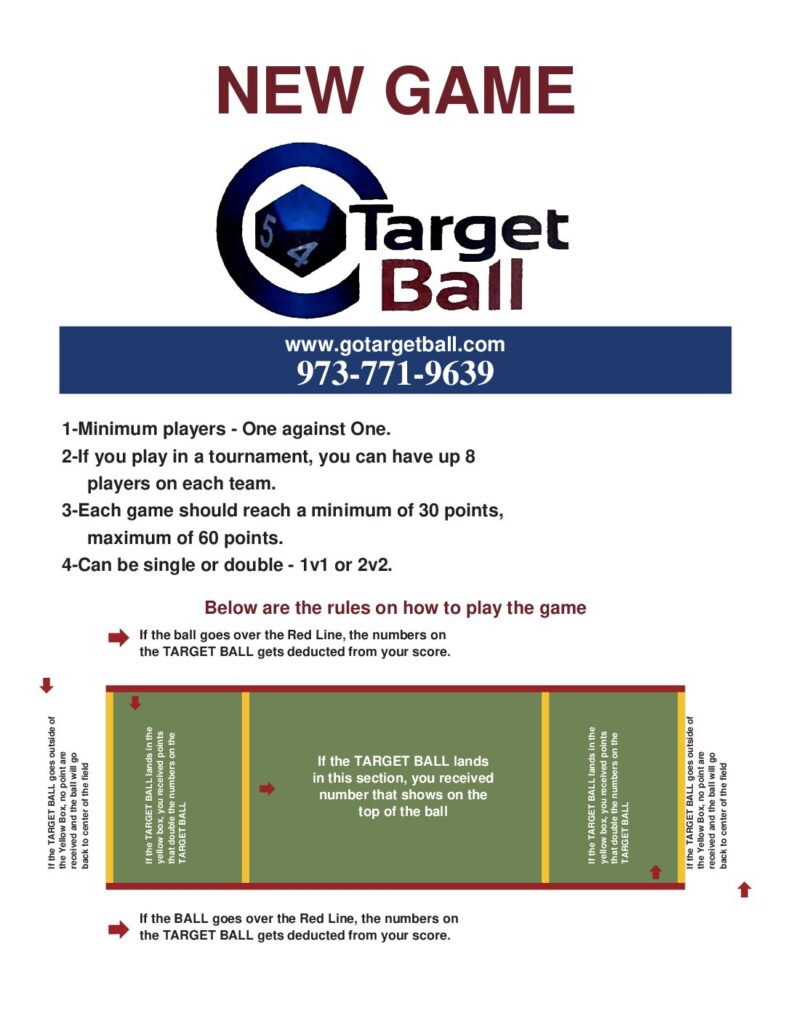
Systems such as Target Ball™, for example, have been introduced as commercial-grade recreation tools that support:
- Large group participation
- Rotational programming formats
- Structured competition models
- Flexible scheduling across programs
These types of systems are not simply recreational games—they are operational tools designed to support efficient municipal programming.
Their value lies in their ability to:
- Improve activity flow
- Reduce idle time
- Support multiple participants simultaneously
- Provide repeatable programming formats
This operational efficiency is one reason structured group systems are gaining traction in municipal planning discussions.
What Municipal Recreation Directors Should Look for When Selecting Group Activities
Selecting the right equipment is a strategic decision.
Experienced recreation professionals typically evaluate activities based on:
✔ Durability and reliability
✔ Ease of setup and storage
✔ Multi-program usability
✔ Participant engagement levels
✔ Safety and supervision needs
✔ Long-term operational value
Equipment that meets these criteria supports consistent, high-quality programming while minimizing disruption.
How Leading Recreation Departments Maintain Strong Community Participation
Top-performing departments do not rely on single-use activities. Instead, they build flexible program models supported by durable, reusable activity systems.
These departments often:
- Standardize reliable activity formats
- Rotate group-based programs
- Invest in long-term equipment solutions
- Evaluate activities based on repeat usability
This strategic approach helps maintain strong participation while controlling costs and improving efficiency.
Why Community Engagement Is Becoming More Important Than Ever
Across municipal recreation systems, expectations are changing.
Communities now expect:
- Inclusive programming
- Safe public environments
- Accessible recreational opportunities
- Meaningful social interaction
Group-based recreation plays a central role in meeting these expectations.
Programs that encourage teamwork, interaction, and shared experiences help strengthen community identity and participation.
This is why durable, repeatable group activity systems are becoming a foundational component of modern municipal recreation planning.
Supporting Municipal Recreation Programs Across New Jersey Communities
Municipal recreation departments across New Jersey towns and counties continue to expand their programming to meet evolving community needs.
From small-town parks to large county recreation systems, departments are seeking reliable ways to:
- Engage youth populations
- Support community events
- Maintain year-round activity schedules
- Deliver measurable community value
Durable group activity systems are becoming an important part of this long-term strategy.
About Professional-Grade Group Activity Systems
Professional-grade group activity systems—such as Target Ball™—are designed specifically for structured environments where reliability, participation, and long-term performance matter.
These systems are used in:
- Municipal parks and recreation departments
- Summer youth programs
- Community recreation facilities
- Public events and seasonal programming
Designed as commercial-grade recreation equipment, they support multi-season programming and large-group participation while helping recreation leaders maintain efficient and consistent program delivery.